SWOT Analysis A SWOT analysis is a way of analysing a company's S trengths, W eaknesses, O pportunities and T hreats. It is a form of strategic planning for a business so that it can work on re-strategising based on the identified points. The strengths and weaknesses are internal issues within the company, and the opportunities and threats are external issues for the company. I decided to conduct a SWOT analysis on Umbro so that I was able to take my research further. Strengths Umbro are an established brand in their industry. They have stuck strongly to their core identity. Well known in the football industry. They have attempted to diversify into streetwear. Continuous discounts (their set prices are lower than competitors as well) Weaknesses They've decreased in popularity. Limited presence in bricks and mortar retailers. Poor Branding. Not very active/ relevant social media. Not much advertising. Opportunities Product d...
4Ps "The marketing mix is one of the most famous marketing terms. The marketing mix is the tactical or operational part of a marketing plan. The marketing mix is also called the 4Ps and the 7Ps. The 4Ps are price, place, product and promotion. The services marketing mix is also called the 7Ps and includes the addition of process, people and physical evidence." Quoted from: https://www.marketingteacher.com/marketing-mix-4ps-and-7ps/ This is what I plan to write in my report: Umbro’s product line is very streamlined. As it appears, they have segregated themselves to sportswear for years, and are now struggling to keep up with their competitors. They mainly sell sports apparel and equipment, including football shirts, football boots, and footballs. Umbro have done collaborations with many brands ranging from MissGuided to Off-White. These have added to their product lines, however; not officially since it is a collaboration and not solely Umbro. Meaning t...
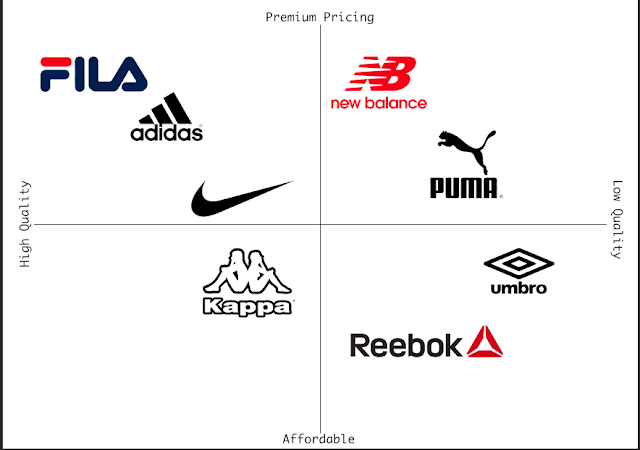
Market Positioning This is marketing map that I have created to show the current position of Umbro and its competitors. These are the axis I used: High Quality Low Quality Premium Pricing Affordable I felt that these are acceptable and evaluative axis as these are the main factors that are causing Umbro to decline. I placed them on the low quality side and the upper end of affordable pricing. As their football shirts and merchandise is of a high quality, however, their garments that aren't related to football are of a poor quality, meaning that I placed them on the low quality end. In comparison to Nike, Adidas and Fila, who are on the "High Quality" and "Premium Pricing" section, yet consumers are more willing to buy their products as they know that they are getting the quality that they are paying for. Ideally, Umbro should be more toward the "High Quality" and on the line of affordable, as people would definitely buy into this, ...

Comments
Post a Comment